The Medina
A Moorish city basically comprised two very distinct parts, the medina – madina – and the suburbs (arrabal) or extramural area.
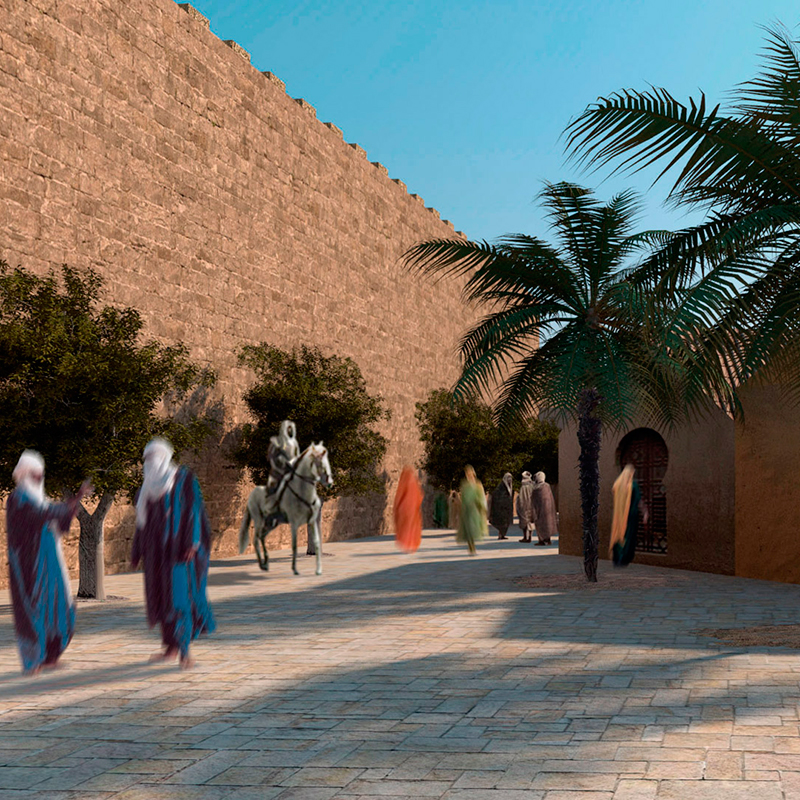
The medina was the enclosed city, a space in which all the population’s activity was pursued, namely residential, commercial and religious. Within this walled enclosure there was a mosque, the open-air market, the alcazar and the public baths.
The suburbs comprised all the constructions that were outside the wall, which functioned independently, having a different jurisdiction.
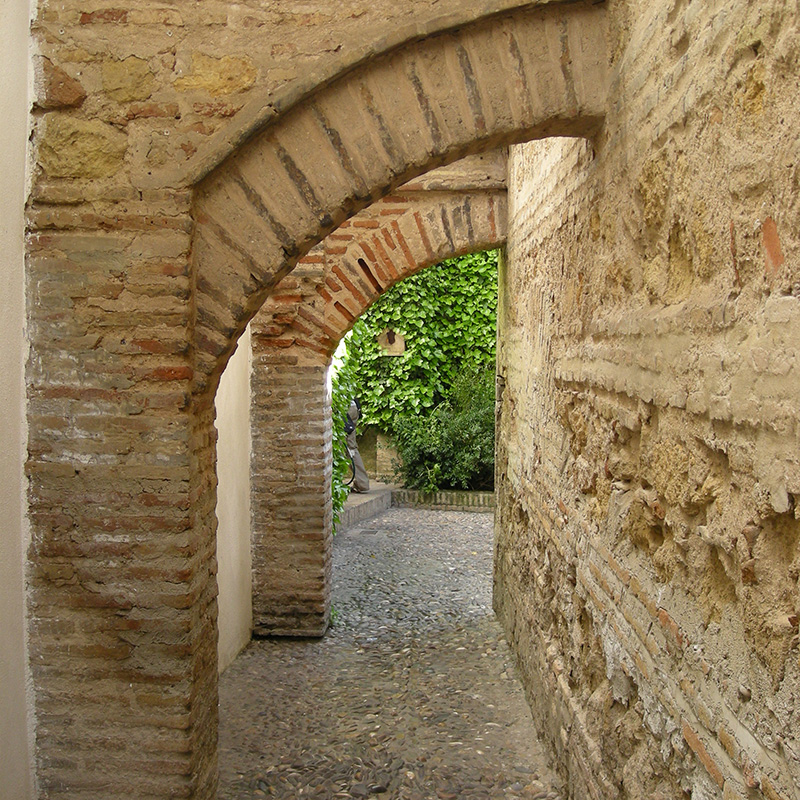
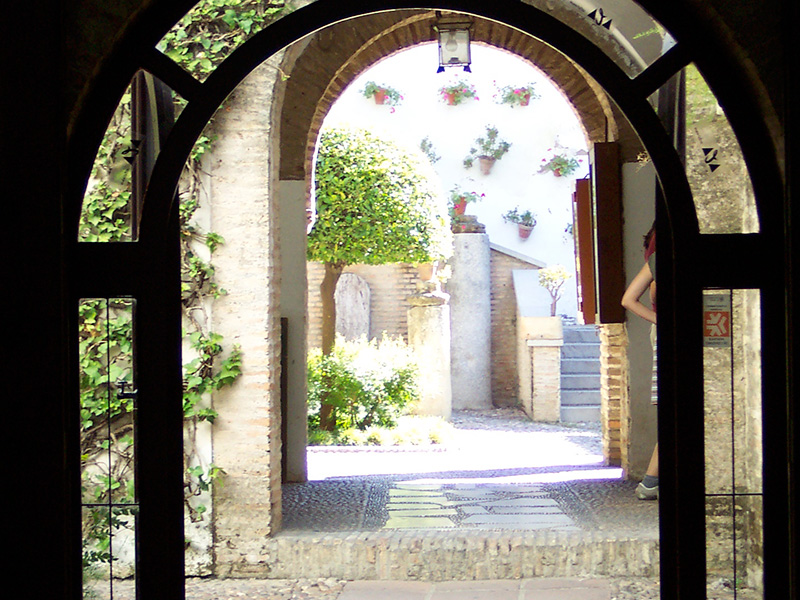
As a general rule the medinas had very irregular structures with narrow winding streets and the houses seemed to turn their backs on the streets since, in consonance with the Muslim insistence on privacy, family life was a private matter, concealed from the exterior.
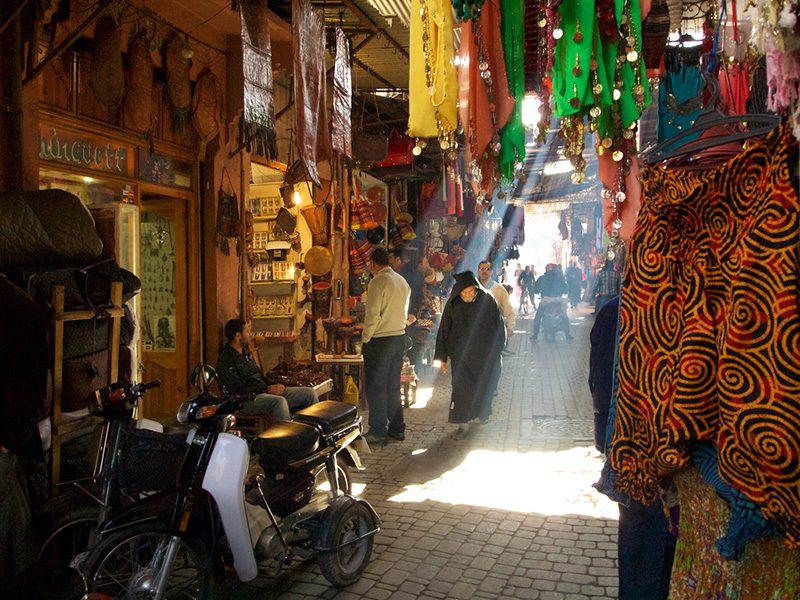
The hub of Andalusi economic life took place in the medinas. Heirs of the Roman-Visigoth era, the cities were nuclei of handicraft production, but also trade centres. Peasants would come to the cities to sell animals and farm products. Inside the cities, business was transacted in the markets and in the streets with small shops grouped together according to specialist fields or professions. Both the handicraft and commercial shops were State assets or mortmain assets, consequent on which their management was supervised by the public treasury.
Most of the urban development in Al-Andalus was undertaken during the 10th and 11th Centuries, which was its most prosperous period. Together with the ongoing defensive needs, cities were founded for representative and strategic purposes, as in the case of Medina Azahara, in Cordoba, a need or desire of a caliph who wanted to amaze the world.
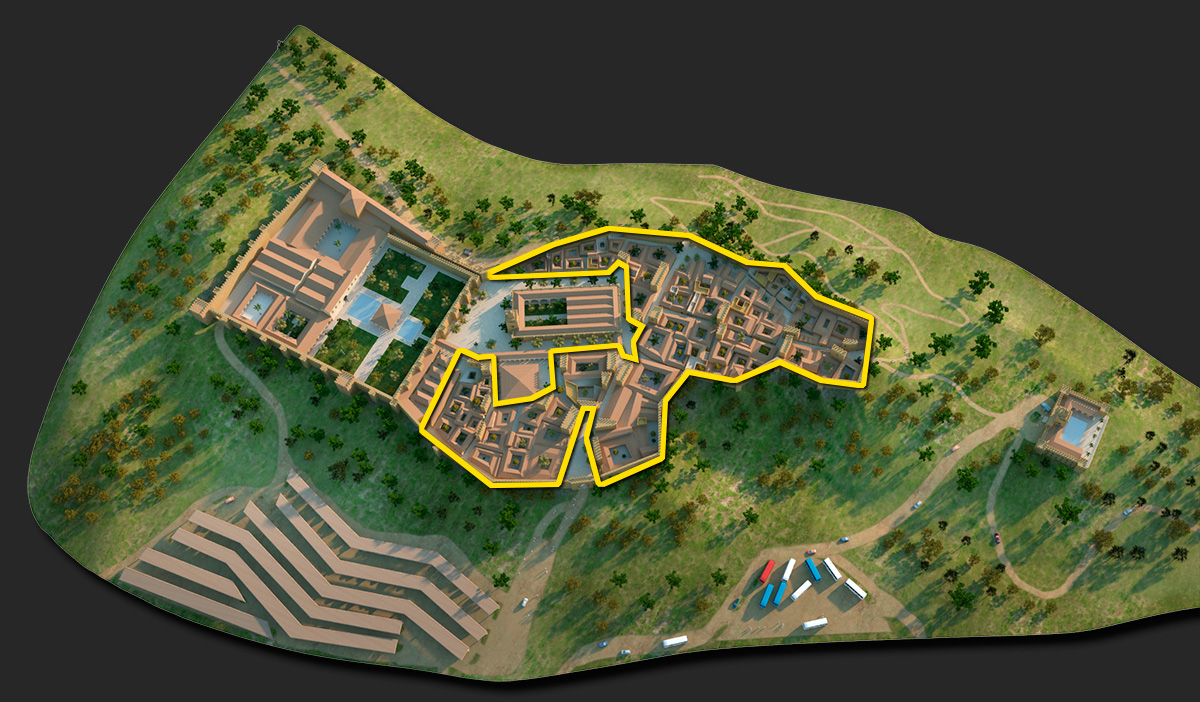
The medina of Ciudad Al-ManSur has its main streets that start from the welcome space and city gates, within which we find the open-air market, the Alcazar, the Alcaicería, the Public Baths and endless secondary streets and alleyways full of life.