Alcaiceria
All of Al-Andalus was an immense cultural centre with very refined tastes. Infinity of products and articles, so far unkown, were introduced into the Iberian Peninsula over this period.
The different silk routes brought fabrics such as silk, woods, precious stones, perfumes and spices from the Far East.
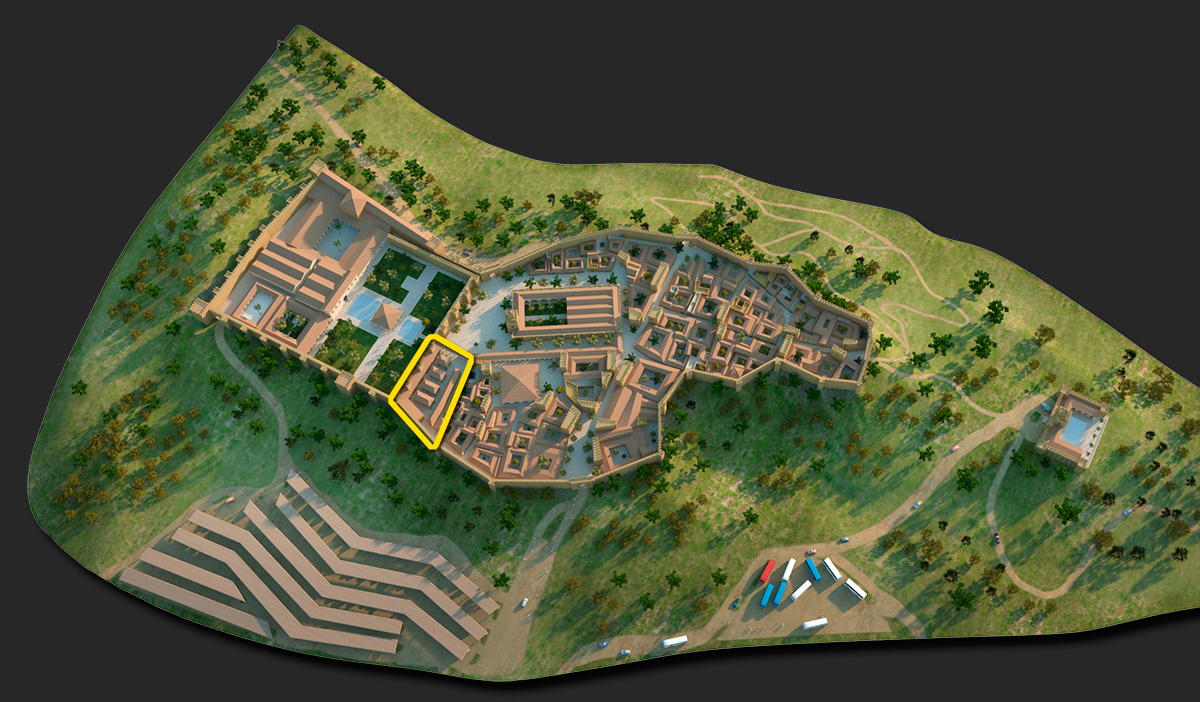
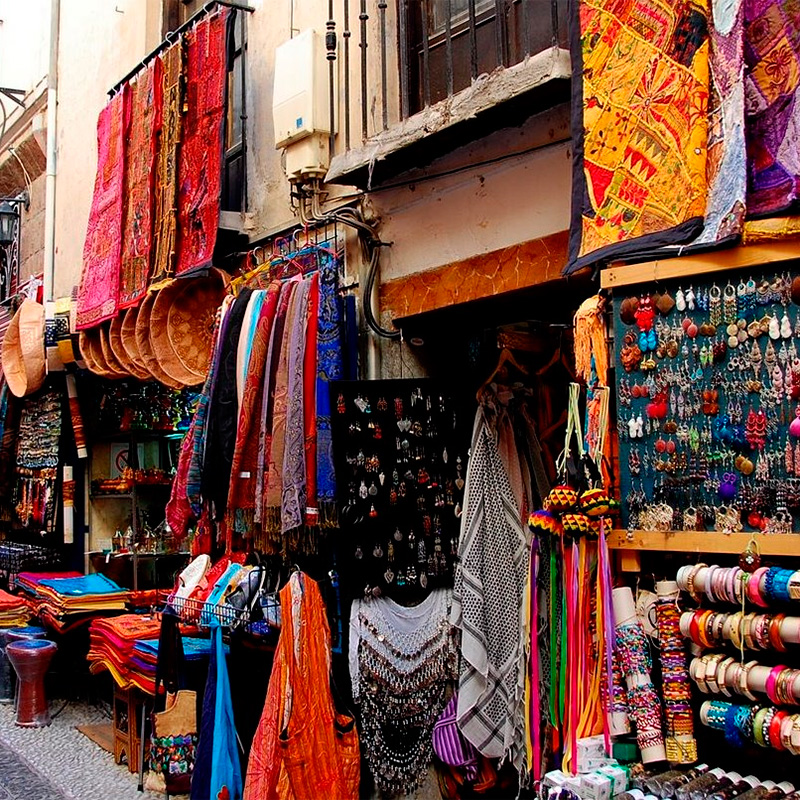
In the Andalusi medina, the de-luxe shops were grouped together in bazaars called alcaicerías – al qaisariyyas – an enclosure with quite large courtyards, surrounded by porticos in which small shops were located and were accessed by a roofed alleyway. Trade of wholesale raw silk was commenced in the alcaicerías and later other luxury items were introduced. Only the most affluent families of the Andalusi city frequented them, as well asthe caliphal nobility, lovers of the refined and luxurious.
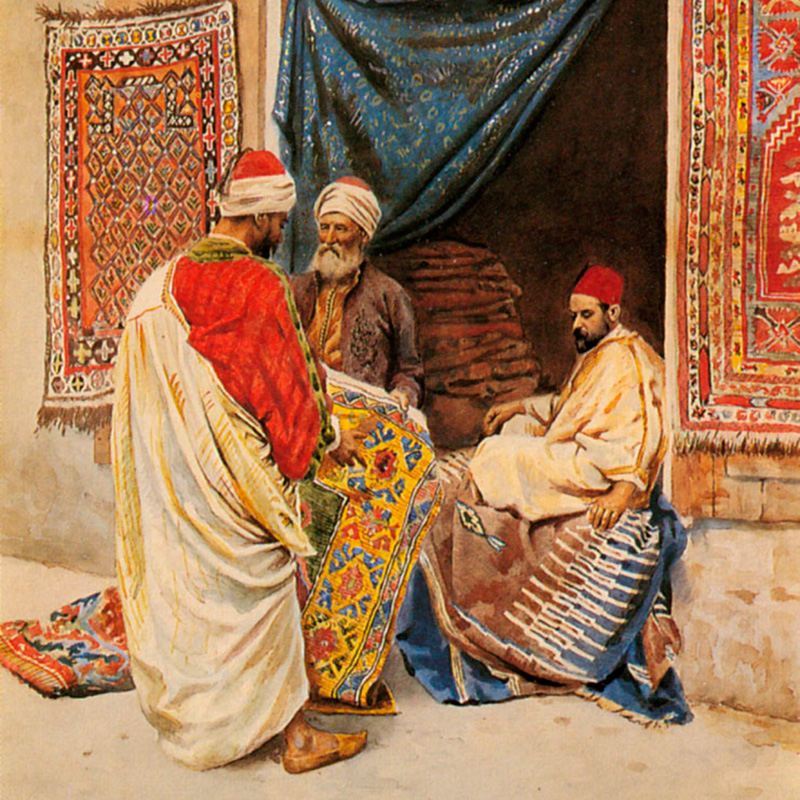
Exquisite silks and brocades could be found at an alcaicería as well as fine clothing, highly valued for its finishes and quality of fabric.
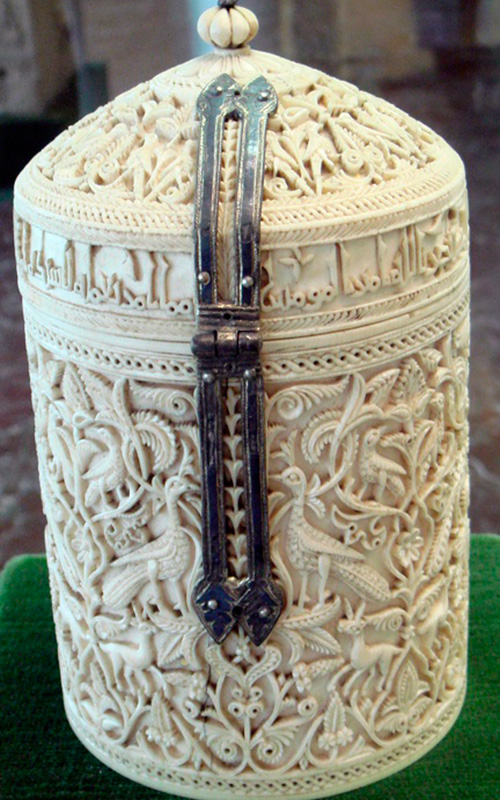
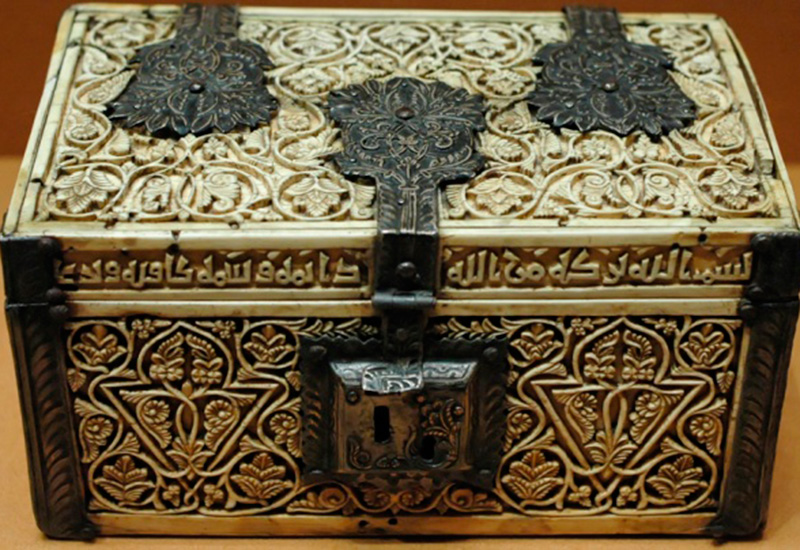
The affluent Andalusis of the caliphate preferred tunics made of silk in the summer and Sahara fox fur in the winter. Unprecedentes glass objects could also be acquired in Cordobathen. In the 10th Century the first European glazed pottery with metallic glint emerged, the caliphal earthenware in Medina Azahara (Cordoba), decorated with a combination of oriental and autochthonous elements.
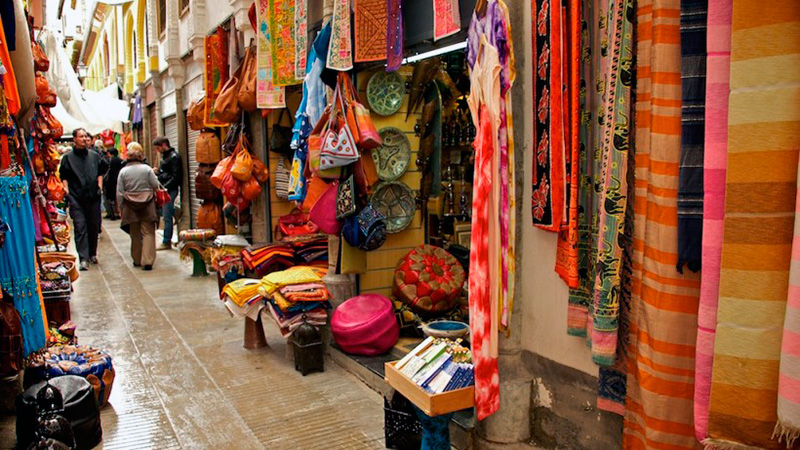
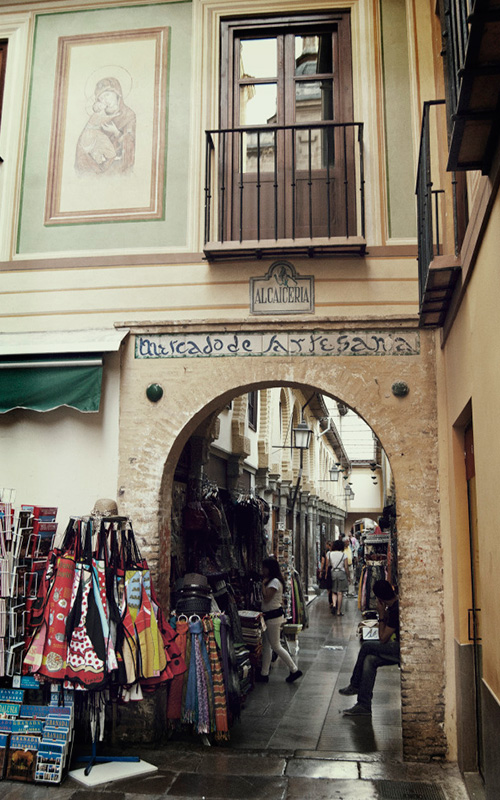
The ambience of these singular shops has been very accurately recreated in the Alcaicería of Ciudad Al-ManSur.