Oven and Mill
Their everyday life, their daily chores, their costumes, their social structures, their popular philosophy and so forth constitute essential elements to gain an insight into any people.
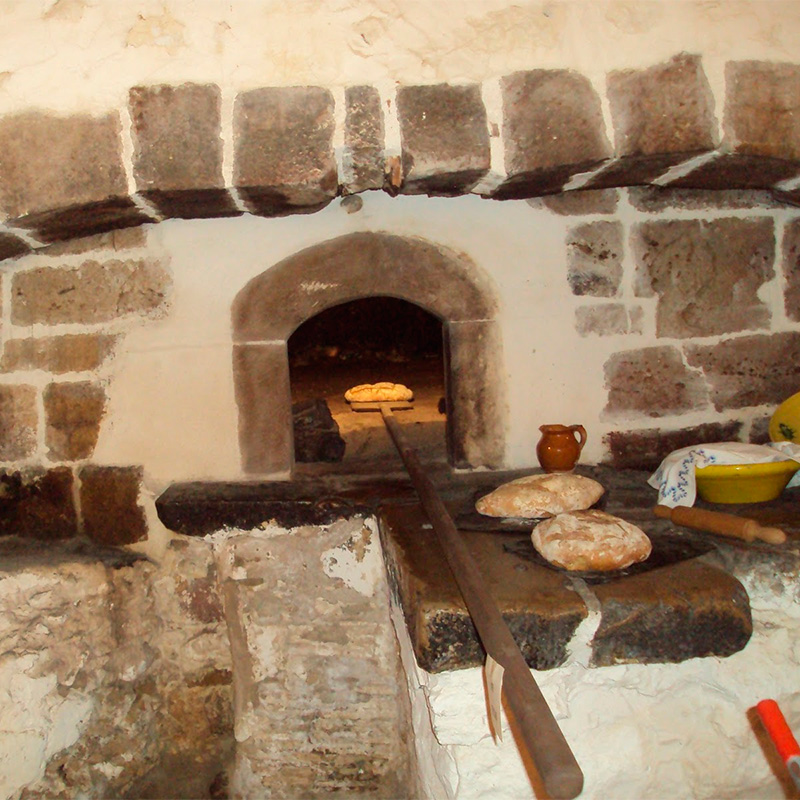
One of the first tasks undertaken by an Andalusi woman in the morning consisted in kneading dough for the bread, the basic food in this era. Once the dough was prepared, she covered it with a napkin for the baker’s boy to take it to the oven. In return, the baker would keep a few rolls which he would later sell to the labourers of the market.
There was usually a public oven or furn in the Andalusi medinas and extramural suburbs in which, as well as baking the bread, other food previously prepared at home was cooked.
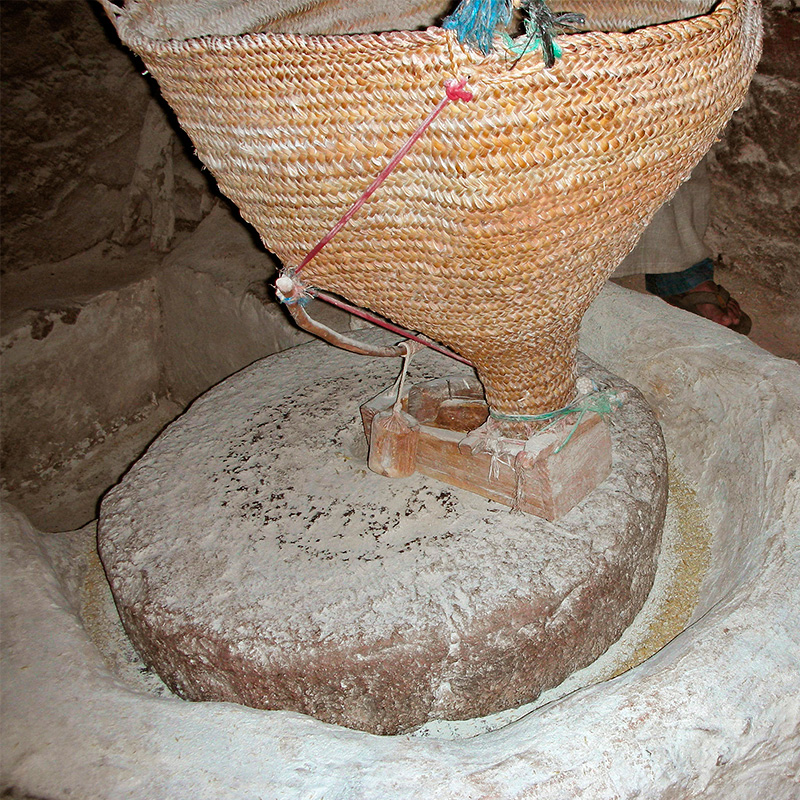
To produce flour, the Andalusis used water mills, nearly always located on the banks of rivers. Several remains of these are left, such as the mill of the Albolafia in Cordoba. This mill, of Roman origin, was to be converted into a noria to be able to transport the water to the caliphal quarters.
The historical role of the Noria Mill of the Albolafia is very important since the Andalusis also used it to produce paper, one of the most thriving industries of the era. With this mill, Cordoba became the first place in Europe to manufacture paper, which had been so far imported from China.