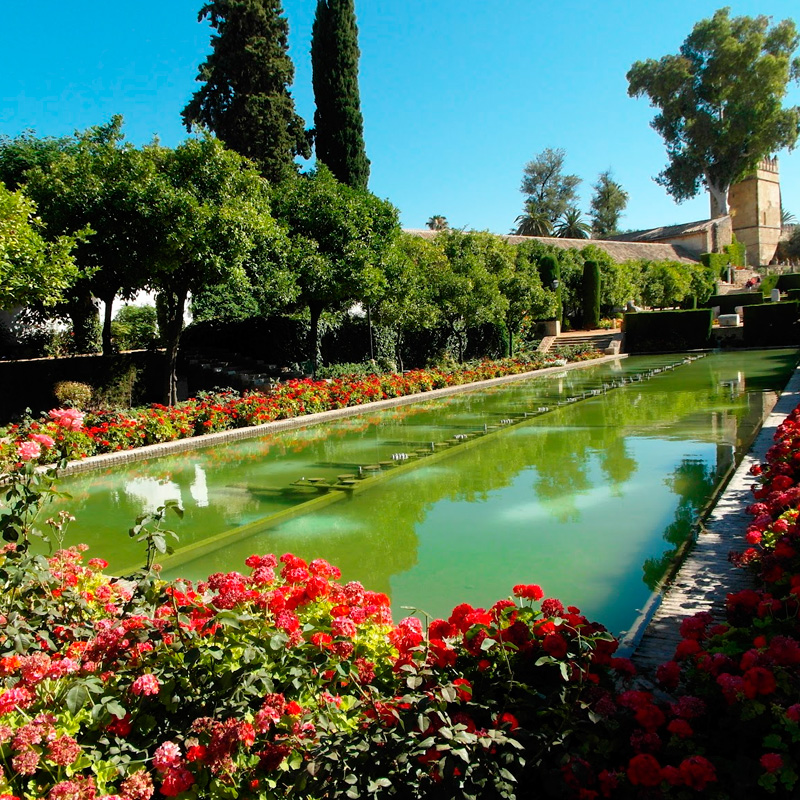
Gardens
Apart from their ornamental function, Andalusi gardens were conceived as a laboratory of botanical experiments for agronomy and pharmacopoeia. The Moors brought an abundance of products of diverse origins to the Iberian Peninsula.
Even though they did not manage to fully acclimatize some species, they obtained very good results with those such as saffron, date palm, sugar cane, cotton, pomegranate and citric fruits, among others.
This acclimatization was fostered by the Umayyad caliphs of Al-Andalus, who installed extensive botanical gardens near their palaces or next to their country residences called almunias. Therefore the services of the gardener were much in demand.
The position of gardener was a praiseworthy one between the Moors, being highly appreciated by emirs and caliphs. These royal gardeners were the complement to the perfume chemist and the physician, professions full of mystery and masterly formulas.
Their legacy lives on today: Al-Andalus was especially known for being the first olive oil producer in the world.