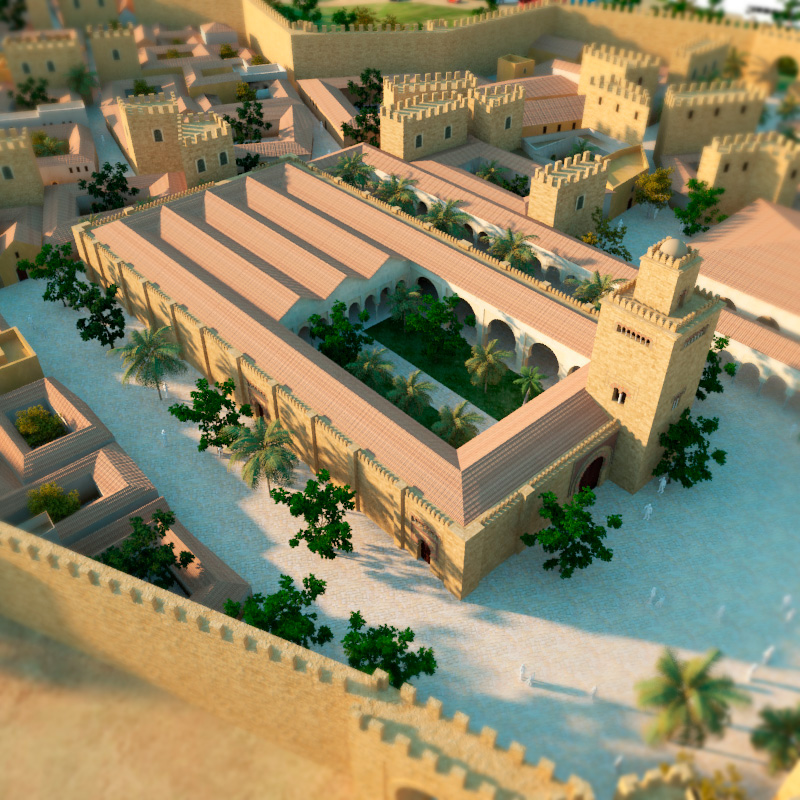
Mosque
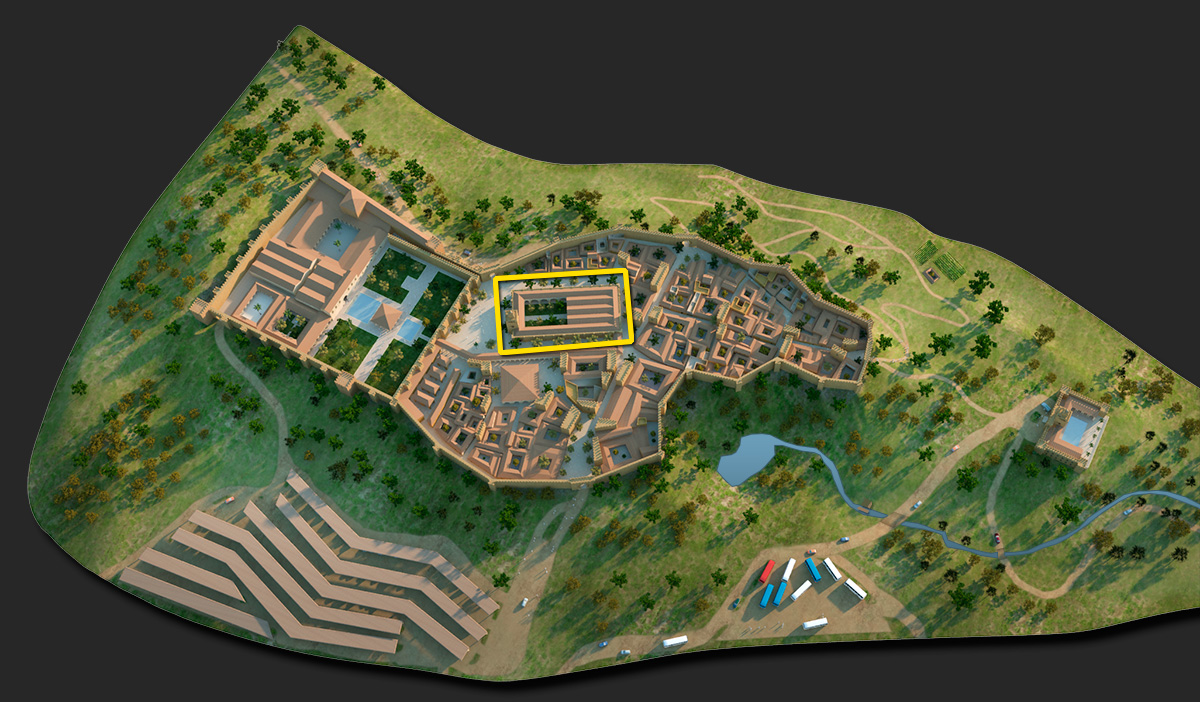
As a symbol of caliphal power, the mosque was the most significant building of an Islamic city.
The size of the mosque was concordant with the importance of the city.
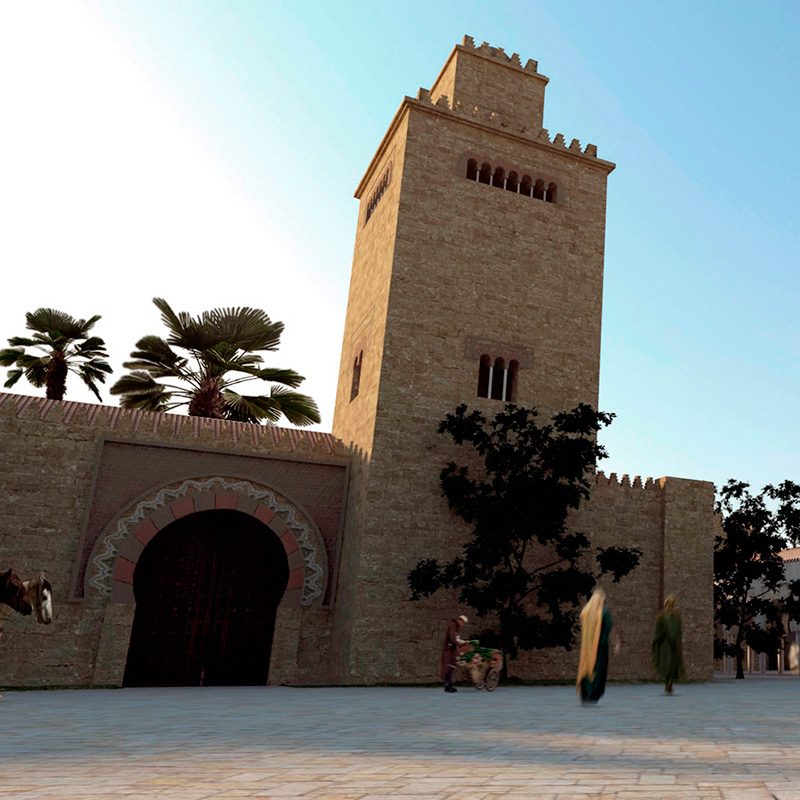
In a typical Moorish city, there were two types of mosques, the masyid and the masyid yámi or great mosque, the latter being the most important of the medina. The size was consonant with the size of the population since the mandatory Friday communal prayer took place there.
Not only were religious functions performed in the mosque, but so also were others of a political, economic and social nature. Civil disputes were also settled here in its courtyards as well as notarial matters, contracts of marriage and public debates.
The origin of the mosques was, apparently, the house of the prophet Muhammad himself in Medina, which had a roofed section and another open-air section. This simple scheme was gradually developed until it became a perfectly functional temple appropriate for the celebration of prayer on the part of the community.
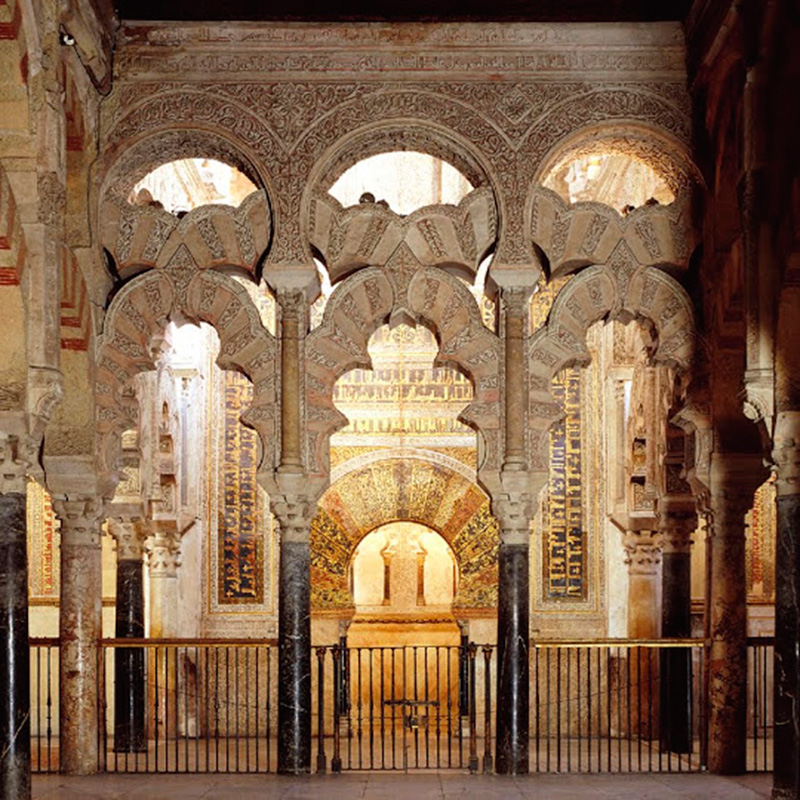
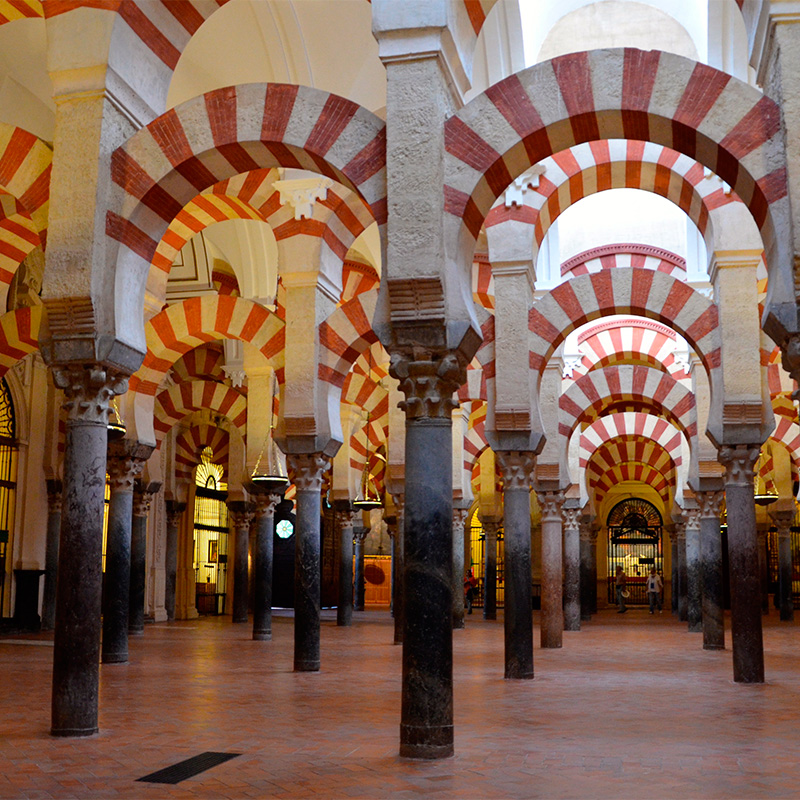
The Great Mosque of Cordoba was the first to be built in Andalusi territory. It is impressive with its almost five hundred columns and superimposed arches, fruit of the works of Abd al-Rahman I, Abd al-Rahman II and al-Hakam II, and finally in 987, Abu Amir al-Mansur (Latin and Spanish, Almanzor) himself. The Cordoba Mosque is not only a symbol of Al-Andalus, but also a fundamental monument of the entire Islamic West and one of the most amazing ones in the world.